
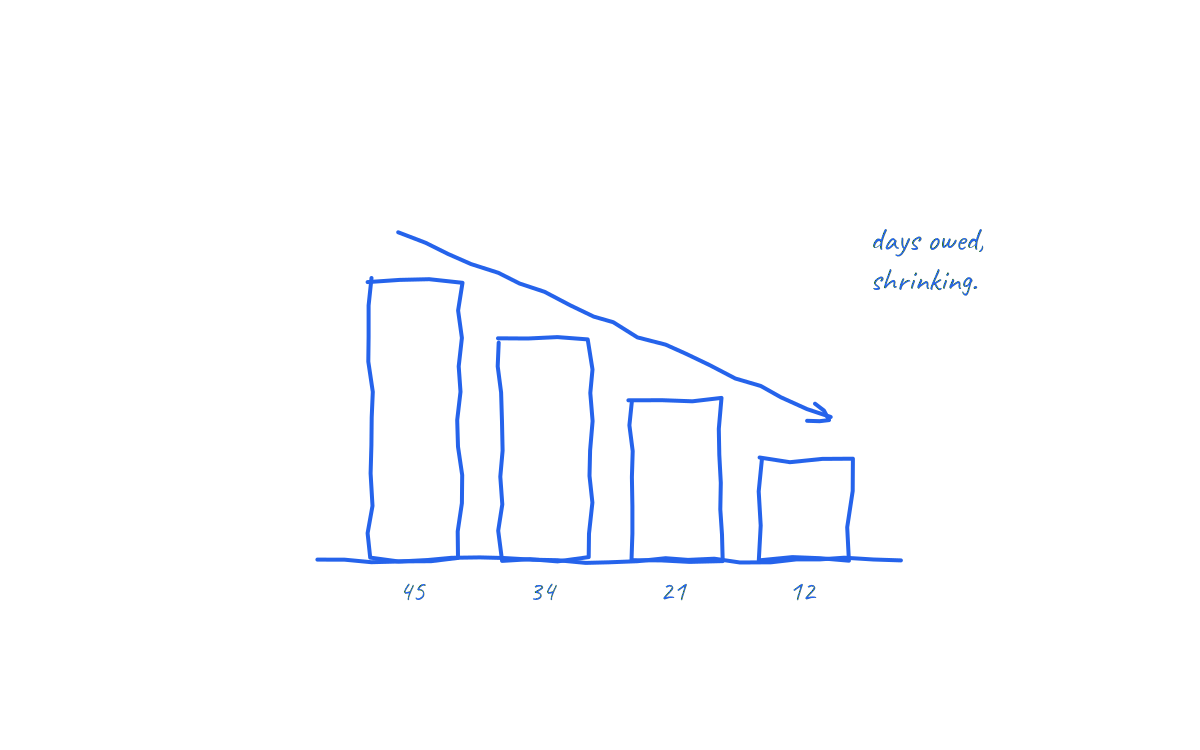
Why debtor days matter for every business
Revenue does not always mean cash in the bank. Many businesses complete work, send invoices and then wait weeks or months before receiving payment.
This gap between invoicing and getting paid is measured through debtor days. The longer customers take to pay, the more pressure it can place on business cash flow.
What are debtor days?
Debtor days measure the average number of days it takes a business to collect payment after issuing an invoice.
A lower number means businesses are collecting money faster. A higher number can indicate delays in the payment process.
Why businesses have high debtor days
High debtor days are often caused by inefficient payment processes, including:
- Customers forgetting payment dates
- Slow manual approval processes
- Invoices being sent without clear payment options
- Teams spending time chasing overdue payments
Ways to reduce debtor days
Businesses can improve payment speed by making the process easier and more consistent.
- Set clear payment terms
- Make invoices simple and accurate
- Offer convenient payment methods
- Automate payment collection where possible
Move towards predictable cash flow
The strongest businesses reduce uncertainty by creating systems that help payments happen on time.
NRTH helps businesses collect invoice payments automatically through Direct Debit, reducing manual chasing and helping improve cash flow visibility.
Create a payment process that works
Reducing debtor days is not about chasing customers harder. It is about creating a payment process that makes paying easier.