
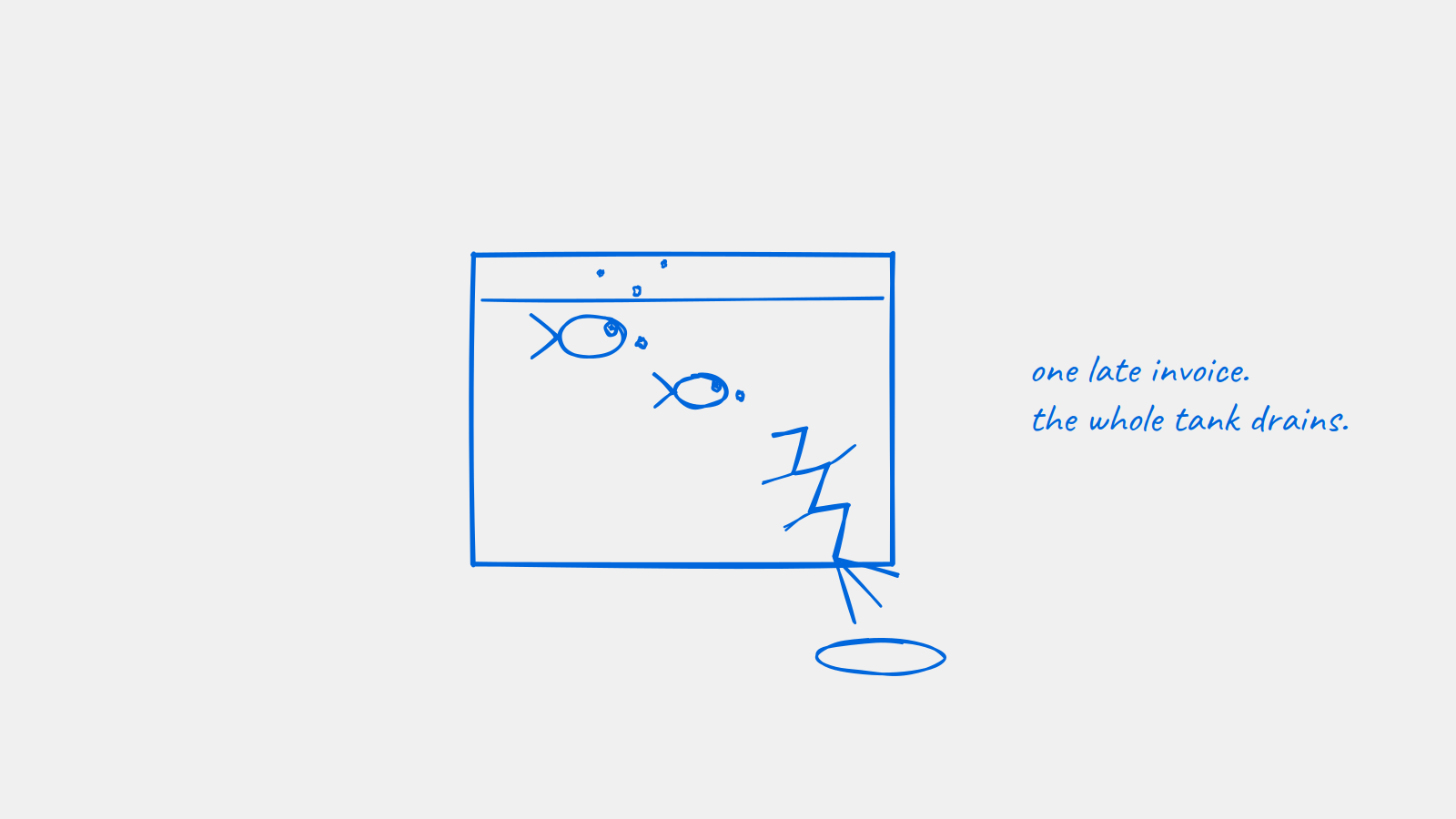
In brief: The cost of a late payment is never just the delayed invoice. It is the borrowing that bridges the gap, the growth that gets postponed, the discounts given away to unlock cash, and in the worst cases the closure of a viable business.
Official research estimates that late payments cost the UK economy almost £11 billion a year and contribute to around 14,000 business closures annually. That is 38 firms a day, most of them profitable on paper.
How big is the problem?
The headline figures from UK government and Small Business Commissioner research:
- around £26 billion is owed to UK businesses in late payments at any given time;
- over 1.5 million businesses are affected each year;
- the average affected business is owed roughly £17,000; and
- for micro businesses, late payments tie up the largest share of turnover of any size band.
Industry data points the same way. Xero's small business insights found a large share of SME invoices paid beyond terms, and 2026 accounting data from Sage showed nearly half of SME invoices overdue, with businesses waiting almost a month on average after issuing. Whichever dataset you prefer, the direction is identical: small suppliers are financing their larger customers, involuntarily and interest free.
Cost one: you become your customer's bank
Every unpaid invoice is credit you are extending. If £17,000 sits overdue and your business covers the gap with an overdraft or invoice finance at 10 to 15% annually, the delay itself costs £140 to £210 per month in financing. That is a real cash expense created purely by someone else's payment behaviour.
Businesses without credit facilities pay differently: delayed supplier payments, deferred VAT conversations with HMRC, or the founder covering payroll personally. The cost does not disappear. It just changes shape.
Cost two: the growth you never see
Cash trapped in debtors is cash not hiring, not buying stock at better prices, not spent on marketing that compounds. A business waiting on £20,000 cannot commit to the new hire even when the pipeline justifies it, because the pipeline pays late too. This is the least visible cost and usually the largest: the counterfactual business that steady cash flow would have built.
Cost three: margin quietly given away
Late payment pressure pushes businesses into margin destroying behaviour:
- early settlement discounts offered just to unlock cash;
- factoring fees on invoices that should have paid normally;
- accepting worse terms from a big customer because the relationship feels fragile; and
- statutory interest and compensation rights left unclaimed to avoid awkwardness.
Each concession looks small in isolation. Across a year of invoices they can take more margin than any supplier price rise.
Cost four: risk concentration and closure
Late payment converts customer concentration into existential risk. If one client is 30% of revenue and pays 60 days late, your survival is tied to their payment run. R3 insolvency data in 2026 flagged rising overdue invoices as an early warning sign for business distress, with small and medium businesses most exposed. The 14,000 closures a year are the end of that chain.
The operational time cost is its own subject. We quantify it separately in how many hours businesses waste chasing invoices.
What changes under the 2026 reforms?
In March 2026 the government confirmed what it called the toughest late payment crackdown in over 25 years. The package includes:
- a cap on payment terms when large firms pay smaller suppliers, moving towards a 60 day maximum;
- statutory interest on late commercial payments becoming mandatory rather than optional; and
- new powers for the Small Business Commissioner to investigate poor payment practice and fine persistent offenders.
The measures still require legislation and will phase in. They raise the price of paying late, which is welcome. They do not collect your invoices. A supplier still needs a payment process that gets money in on time, reform or no reform.
What can you claim today?
Under existing law, UK businesses can already charge statutory interest at 8% above the Bank of England base rate on qualifying late commercial debts, plus fixed recovery compensation of £40 to £100 per invoice depending on value. Many suppliers never invoke these rights. Whether to charge is a commercial judgement, but knowing the entitlement changes the negotiation. Check the current rules and your contract before applying charges.
How to cut the cost, not just count it
- Price the problem. Calculate your average debtor days, the value overdue at any time, and the financing cost of that balance. A number focuses the fix.
- Diagnose before chasing. A missing purchase order and a customer cash crisis need different responses. Our guide to why clients pay invoices late covers the seven causes.
- Tighten the front door. Credit check new customers, agree terms and payment method before work starts, and set credit limits you actually enforce.
- Automate collection for repeat customers. Direct Debit removes the customer action from every routine invoice. Compare the options in Direct Debit versus card versus bank transfer.
- Escalate on a system, not a mood. A written credit control process applied consistently beats ad hoc chasing every time.
How NRTH changes the economics
NRTH connects invoices in Xero, QuickBooks or Sage with Direct Debit collection. The customer approves a mandate once; each invoice then supplies its own amount and due date and is collected on schedule. The debtor balance shrinks, the financing cost shrinks with it, and cash forecasting starts from known collection dates rather than hope.
The cheapest late payment is the one that never happens.
Frequently asked questions
How much do late payments cost UK small businesses?
Government research estimates almost £11 billion a year in economic cost, with around £26 billion owed at any time and roughly 14,000 businesses closing annually as a result.
Can I charge interest on a late invoice?
Qualifying B2B debts can attract statutory interest at 8% above the Bank of England base rate plus fixed compensation, subject to the contract. The 2026 reforms propose making interest mandatory. Take advice before applying charges.
What is the biggest hidden cost of late payment?
Usually the opportunity cost: growth postponed because cash is trapped in debtors. Financing costs and margin given away through discounts and factoring follow close behind.
Will the 2026 late payment reforms fix the problem?
They increase the consequences for late payers, particularly large firms. They do not change how your invoices get collected, so suppliers still benefit most from automating collection and tightening credit control.
The invoice is the tip. The financing gap, the stalled growth and the risk sit underneath.
See how NRTH collects invoices by Direct Debit on the due date, or talk to the team.
Sources and further reading
- Small Business Commissioner: late payments research
- DBT: economic impact of late payments
- Farrer & Co: the 2026 late payment reforms explained
- The Fair Payment Code
Last reviewed: 21 July 2026. Financing calculations are illustrative. This is general information, not legal or financial advice.