
In brief: GoCardless standard UK pricing is 1% plus 20p per Direct Debit transaction, capped at £4 per payment, with no monthly fee on the entry tier. Higher tiers raise the rate and cap in exchange for extra features. Around the headline rate sit additional charges worth understanding: a high value surcharge, refund fees, chargeback fees, international rates and VAT on all fees.
This guide walks through the full structure as published at the time of writing, so you can price your own invoice book accurately. Pricing changes, so always confirm against the live GoCardless pricing page before deciding.
The standard tier
GoCardless standard pricing for UK Bacs Direct Debit is 1% plus 20p per transaction, capped at £4 for domestic payments. There is no setup fee or monthly platform charge on this tier, which makes it genuinely easy to start with.
Worked examples at the standard rate:
- £100 invoice: £1.20 fee
- £250 invoice: £2.70 fee
- £380 invoice: £4 fee, the cap kicks in
- £1,000 invoice: £4 fee
- £5,000 invoice: £4 fee plus the high value surcharge below
The charges around the headline rate
- High value surcharge: an additional 0.30% applies to the portion of a transaction above £2,000. On a £5,000 collection that adds £9 to the capped fee.
- Refunds: charged at 50p per refund.
- Chargebacks: £5 each where volumes exceed a threshold.
- International collections: around 2% plus 20p on the standard tier, rising on higher tiers, with no cap.
- VAT: HMRC requires VAT on GoCardless fees to UK merchants, so add 20% to every figure above unless you can recover it.
The higher tiers
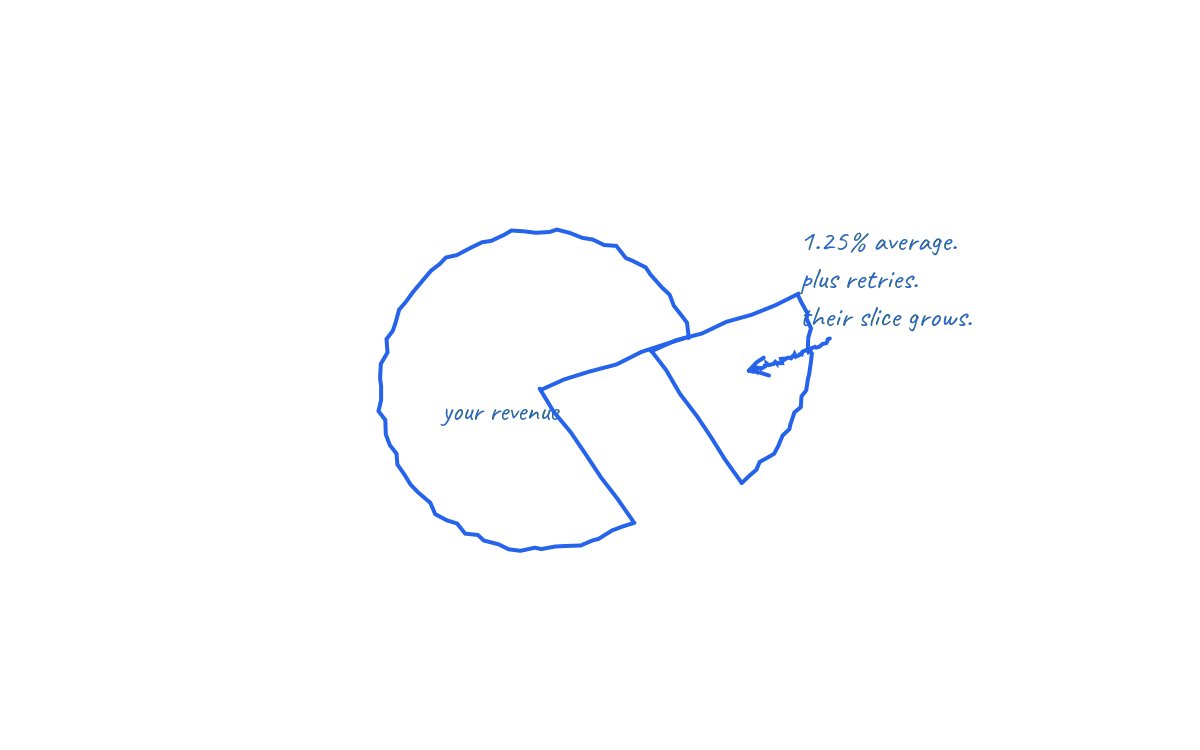
Advanced and Pro tiers raise the domestic rate to around 1.25% plus 20p (capped near £5) and 1.4% plus 20p (capped near £5.60) respectively, in exchange for features such as intelligent payment retries and custom branding. Enterprise arrangements are negotiated, and public sector framework pricing has included annual platform fees with per transaction rates structured differently. The pattern to note: the features that improve collection success sit on the more expensive tiers.
What the fees mean for an invoice business
For subscription businesses collecting small regular amounts, the percentage model is cheap and simple. For invoice businesses the picture is more mixed, for three reasons.
First, invoice values are lumpy. The £4 cap is excellent on a £1,500 invoice, but the 0.30% surcharge above £2,000 quietly reintroduces a percentage on exactly the invoices where you expected the cap to protect you.
Second, fees are only part of the cost. The operational question is how much manual work sits around the payment: getting invoice amounts and due dates into the system, matching collections back to invoices, and handling failures. A low fee with manual reconciliation can cost more in salary than a higher fee with none. The full cost lens is in how to automate invoice collection.
Third, settlement timing matters. Reviews note holds on first collections from new customers, and payout schedules vary by account. When you compare providers, ask two separate questions: when is the customer debited, and when do cleared funds reach you.
How NRTH compares
NRTH is built specifically for invoice collection rather than general recurring billing. Invoices in Xero, QuickBooks or Sage supply the amount and due date directly, collections are scheduled against those due dates, and payment status reconciles back to the invoice automatically. Current NRTH pricing is published on our pricing page, and the fairest comparison is total cost per successfully reconciled invoice: fees plus the admin time each setup leaves behind.
For the wider decision framework, see GoCardless alternatives for UK businesses and the method level comparison in Direct Debit versus card versus bank transfer.
Questions to ask any Direct Debit provider
- What is the effective fee on my actual invoice profile, including surcharges and VAT?
- When do cleared funds reach my account, including first collections?
- How do invoice amounts and due dates get into the system, and how does payment status get back to my accounting platform?
- What do failures cost, in fees and in workflow?
- What happens to my mandates if I later switch provider?
Frequently asked questions
How much does GoCardless cost per transaction in the UK?
Standard pricing is 1% plus 20p per domestic Direct Debit, capped at £4, plus a 0.30% surcharge on the portion above £2,000, with VAT on fees. Higher tiers carry higher rates and caps.
Does GoCardless have a monthly fee?
The standard tier has no monthly fee. Paid tiers and enterprise arrangements are priced differently, and some framework agreements have included annual platform fees.
Is GoCardless cheaper than card payments?
For larger invoices, usually yes, because card fees are typically uncapped percentages while the Direct Debit fee caps out. The crossover depends on your card rate and invoice sizes.
What is the cheapest way to collect invoices by Direct Debit?
Measure total cost per reconciled invoice: transaction fees, surcharges, VAT, failure costs and the admin hours your team still spends. The cheapest headline rate is not always the cheapest outcome.
Compare the whole workflow, not the first number on the pricing page.
See how NRTH prices invoice collection end to end, or talk to the team.
Sources and further reading
- GoCardless: official pricing page
- GoCardless support: pricing and fees detail
- Business Expert: independent GoCardless review
Last reviewed: 21 July 2026. Third party pricing changes; verify against the provider's live pricing before deciding. This is general information, not financial advice.