
In brief: Yes. Direct Debit can collect one off payments as well as recurring ones. The mechanism is identical: the customer approves a mandate, receives advance notice of the amount and date, and the collection travels through the normal Bacs cycle.
The idea that Direct Debit is only for subscriptions is one of the most persistent myths in UK payments, and it costs invoice based businesses real money. A one off invoice is exactly the kind of payment that gets forgotten in an inbox. Direct Debit is built to remove that failure mode.
Where does the subscription myth come from?
Most people meet Direct Debit through energy bills, broadband, gym memberships and insurance, so the association with monthly billing is natural. But the Bacs scheme itself has no rule that payments must recur. A Direct Debit Instruction authorises an organisation to collect agreed amounts from an account. Whether that means one payment or a hundred is a commercial arrangement, not a scheme constraint.
The mechanics are covered fully in how Direct Debit works. The short version: mandate, notice, collection. None of those steps requires repetition.
How does a one off Direct Debit work?
- The customer approves a mandate. Usually through a secure online form taking account name, sort code and account number. See what a Direct Debit mandate is.
- The instruction is lodged with the customer's bank through the Bacs system.
- The customer receives advance notice of the specific amount and collection date, normally ten working days unless a shorter period has been agreed.
- The payment is collected through the standard three working day Bacs cycle and reconciled against the invoice.
After the payment, the mandate can simply remain dormant, be cancelled by the customer, or stay active in case future invoices arise. That last option quietly converts a one off customer into a zero friction repeat customer.
When does one off Direct Debit make sense?
- Project and milestone invoices. Agree the mandate at contract signing; collect each milestone on its due date without a fresh payment conversation.
- Large invoices where card fees sting. A percentage card fee on a £10,000 invoice is real money. Direct Debit costs typically do not scale with value the same way.
- Deposits and balances. One mandate covers the deposit now and the balance on completion, even though the amounts differ.
- Payment plans. A schedule of agreed instalments is a series of one off collections under one mandate.
- Any invoice where you would otherwise wait for a bank transfer. If the due date is known in advance, the collection can be scheduled for it.
When is it the wrong tool?
Direct Debit runs on the Bacs calendar, so it is not built for money needed within the hour. For a genuinely urgent same day payment, a bank transfer through Faster Payments is more appropriate. For an anonymous checkout with no ongoing relationship, card is usually more natural. The full trade offs are in Direct Debit versus card versus bank transfer.
The honest framing: Direct Debit is the strongest option when the payment is known in advance, which describes almost every invoice with a due date.
What protects the customer on a one off collection?
Exactly the same protections as any Direct Debit:
- advance notice of the amount and date before the account is debited;
- the Direct Debit Guarantee, giving a full and immediate refund from their bank if an error is made in setting up or collecting the payment; and
- the right to cancel the mandate through their bank at any time.
This matters commercially. "Why would my customer approve a Direct Debit for one invoice?" has a clean answer: because it is the payment method where the payer holds the strongest error protection, and they never have to type your bank details into anything.
How to introduce it to customers
Position it as removing work from their side: no logging into banking, no reference numbers to copy, no due date to remember, full notice before any money moves. Include the mandate link at the point of agreement, when cooperation is highest. For business customers, mention that one approval also covers any future invoices, which most accounts payable teams recognise as a favour.
How NRTH handles one off collections
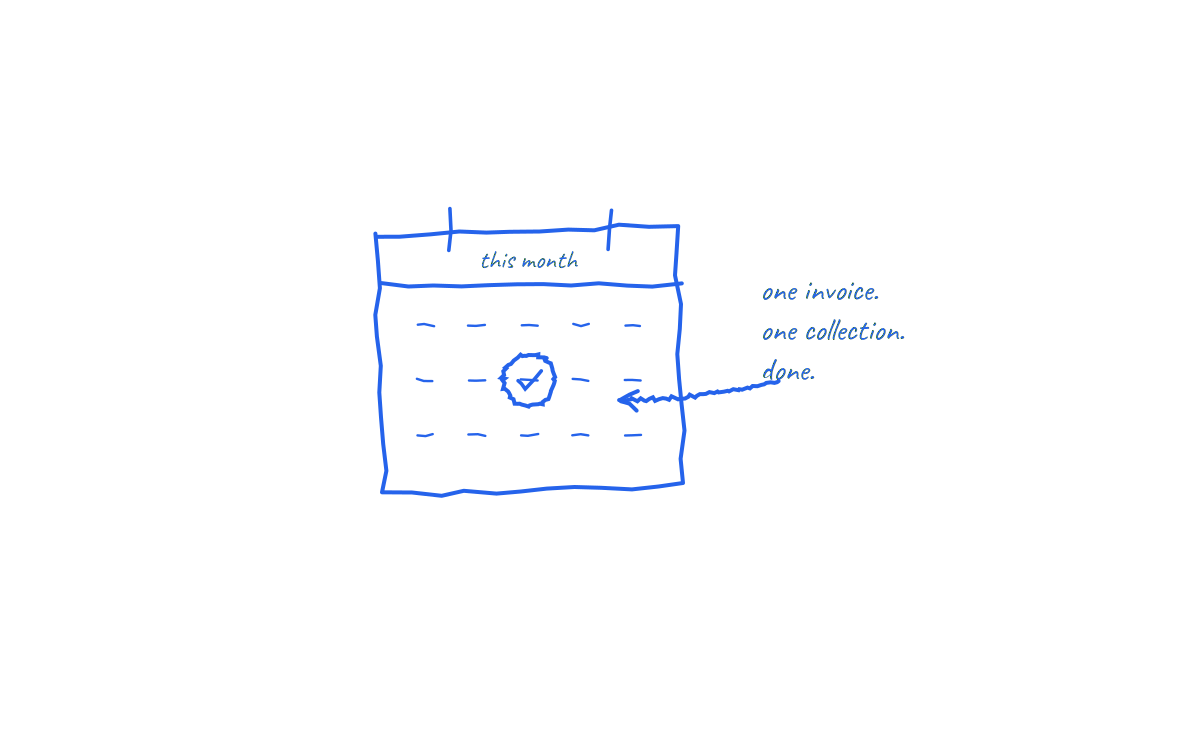
NRTH treats the invoice as the source of truth. Raise a one off invoice in Xero, QuickBooks or Sage, and with an active mandate the amount and due date flow straight into the collection workflow. One invoice, one collection, no retyping. If the customer returns next quarter, the same mandate is already in place.
Frequently asked questions
Does the customer need to sign a new mandate for each payment?
No. One active mandate can support any number of collections, whether that turns out to be one payment or many. Each collection just needs its own advance notice.
How long does a one off Direct Debit take?
Allow time for mandate setup and the advance notice period on a first payment, then the three working day Bacs cycle. For a known due date, the collection is simply scheduled to land on it. Full timings are in how long Direct Debit takes.
Is there a maximum amount for a one off Direct Debit?
The scheme handles substantial values, though providers and banks may apply their own limits and checks. Confirm limits with your provider for unusually large collections.
Can the mandate stay active afterwards?
Yes, and it usually should. A dormant mandate costs nothing and means the next invoice, whenever it comes, collects without any new setup. Note that long unused instructions can lapse under scheme rules, so check before relying on a very old one.
If the invoice has a due date, the payment can be scheduled. Once or forever makes no difference to the rails.
See how NRTH collects one off and repeat invoices alike, or talk to the team.
Sources and further reading
- Bacs: Direct Debit overview
- The official Direct Debit Guarantee
- Bacs: getting started with Direct Debit
Last reviewed: 21 July 2026. Provider limits and onboarding requirements vary. This is general information, not financial advice.